
🐾 In Memory of Dexter — Understanding GDV in Dogs
Remembering a much-loved Labrador, and the emergency signs every dog owner should know
This page describes the last hours of a much-loved dog. Take your time with it. If you have lost a dog recently, The Sad Page has support.
💙 Dexter
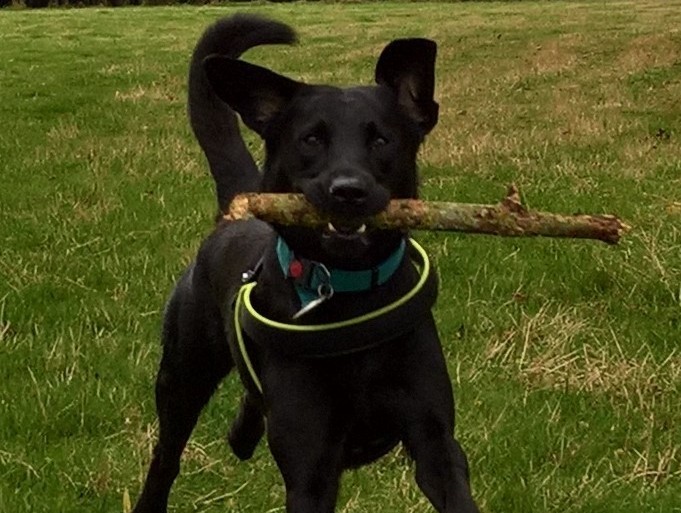
Dexter was a 9-year-old Labrador, two months short of his 10th birthday. He loved people and other dogs, and he loved swimming and eating.
He was also the most expensive dog I have ever had. If there was something a dog could catch or get, Dexter would have it. He was born with incomplete cartilage in his joints, so he always had arthritis, but it never stopped him or slowed him down. To him it was just normal. We paid for stem cell treatment, which helped but couldn't cure him. He became allergic to grass pollen, which was another quarterly expense, and just when you thought nothing else could go wrong with him, he would crack a tooth or find something new. Sometimes he was ill with no clear reason, stayed overnight at the vet's, and came bouncing back the next morning.
He thought the vet's was his second home. He went in happy to see everyone every three or six months.
Through all of it he always looked fit and healthy, and people would remark on his shiny coat.
He was my best friend. He kept me calm and relaxed when my job was stressful, and he was always there for me.
🕐 That evening
I'm writing down exactly what happened, in order, because the signs were small and they came one at a time.
- 6:30pm Playing with me and jumping around, completely himself.
- 7:00pm Ate his normal dinner.
- 8:00pm Went into the garden and was sick. There was no blood in it.
- Shortly afterwards Came back in and sat down, looking uncomfortable and panting.
- 8:30pm The panting stopped, and he went to bed.
- About 15 minutes later Got up, lay on the floor and was sick again, a small amount, this time with some red blood.
- 9:00pm Went back into the garden and lay down. He still responded to me and wagged his tail, and he looked perfectly relaxed. I believed he was over it.
- By 10:45pm He had died. There was no sign of pain.
When the panting stopped and he settled, I thought the worst had passed. I didn't understand then that a dog can go quiet because he is getting weaker, not because he is getting better. I want you to know that before you are ever in the same position.
❓ What I don't know
I never found out for certain what took Dexter, so I can't tell you it was GDV. What happened that evening fits with it, and GDV is one of the emergencies large dogs are known for. But it also fits other emergencies. One is bleeding from a ruptured tumour, which is a recognised cause of sudden collapse in older Labradors and other large dogs (see other emergencies that look similar). Only an examination and imaging, such as an X-ray or ultrasound, can tell these apart.
That is really the point of this page. You can't tell at home which emergency it is, and you don't need to. The right response to all of them is the same: phone a vet straight away. The rest of this page covers GDV in detail, because it is common, it moves fast, and it can be treated if it is caught in time.
🩺 What is GDV?
GDV stands for gastric dilatation-volvulus. It is often called bloat, or a twisted stomach. First the stomach fills with gas and swells (dilatation). Then it twists on itself (volvulus), which blocks both the way in and the way out. The gas can't escape, so the pressure keeps building. As it builds:
- The swollen stomach squashes the large blood vessels in the abdomen, so less blood gets back to the heart and the rest of the body. Blood pressure drops and the dog goes into shock.
- It presses on the lungs, which makes breathing harder.
- The stomach wall is stretched and damaged, and can start to leak bacteria into the bloodstream. The spleen, which sits next to the stomach, can twist as well.
Vets describe GDV as extremely painful as well as life-threatening. But dogs are very good at hiding how they feel, so don't rely on seeing obvious pain (our Recognising Illness Early page explains how dogs can seem fairly normal until a condition becomes severe).
A stomach that has swollen without twisting is also an emergency, and only a vet can tell the difference.
⏱️ Why it is so dangerous, and so fast
Emergency vets describe GDV as a race against time. Symptoms often develop quickly and get rapidly worse, and a dog can be lost within hours. The longer the stomach stays twisted, the less blood reaches the heart and other organs, and the more damage is done.
The good news is that it can be treated, and that the outlook is much better than it used to be:
These figures only count dogs that reach treatment, and they vary between studies. Decades ago a diagnosis of bloat was almost always fatal. Faster recognition and modern treatment have changed that, which is exactly why speed is the one thing you can control.
🐕 Which dogs are at risk?
Any dog can get GDV, but some are far more likely to:
- Large and giant, deep-chested breeds. PDSA names German Shepherds, Great Danes, Saint Bernards and Dobermanns. In the UK study, the Great Dane, Akita, Dogue de Bordeaux, Irish Setter and Weimaraner had the highest odds.
- Heavier dogs. In the same study, dogs over 40 kg had about 150 times the odds of dogs under 10 kg. Small dogs can still get it, but rarely.
- Middle-aged and older dogs. The odds rose with age, up to 12 years.
- Pedigree dogs. Pure-bred dogs were more than five times as likely as cross-breds, although cross-breds can still get it.
- Dogs with a close relative that has had GDV, such as a parent or full sibling.
- Excitable or nervous dogs, according to PDSA.
Labradors are not among the breeds with the very highest risk in the UK study, but they are large dogs and they do develop GDV, so every Labrador owner should know the signs.
🔍 What causes it?
The honest answer is that nobody knows exactly what makes the stomach twist. Veterinary sources say the exact cause is unknown.
What is known is a list of things linked with a higher risk: a large, deep chest, age, a family history, and a nervous or anxious temperament. Eating very quickly, being fed one large meal a day, and eating from a raised bowl are also linked with higher risk, although researchers are still working out how much each one matters. PDSA also advises avoiding exercise and car travel for an hour before and after meals.
⚠️ Signs to watch for
Early signs: act now
- Retching or trying to be sick with nothing coming up, or only foam. This is the classic sign.
- Restlessness: pacing, unable to settle, panting.
- Drooling more than usual.
- A swollen or tight belly. In a deep-chested dog it may not be obvious, because the belly can be tucked up under the ribs.
- Looking uncomfortable, or looking round at his sides.
Late signs: emergency, go now
- Pale, white, grey or blue gums. (PDSA explains how to check)
- Weakness, wobbling, being unable to stand.
- Difficulty breathing, or fast, shallow breathing.
- Collapse.
Don't wait for the textbook sign. Dogs don't read the textbook. Dexter was sick and not just retching, and the signs came one at a time. What matters is the pattern: a dog who was fine an hour ago and is now sick and uncomfortable, restless or panting.
Blood in vomit is a reason to contact your vet immediately, according to PDSA.
🤫 When the dog goes quiet
This is the part I most want you to take from Dexter's story.
Panting, pacing and retching are visible distress. When they stop, it is natural to feel relieved. But shock works the other way. A dog in shock often becomes weak, quiet and dull, and veterinary guidance warns that shock can do irreparable damage within minutes, so a dog shouldn't be assumed to be safe just because he looks calmer. A dog who lies down quietly after hours of discomfort may be settling because he is weaker, not because he is better.
So ask yourself one question: is he brighter, or only quieter?
Brighter looks like
- Interested in you and what's around him
- Up and moving normally
- Normal gum colour
- Calm, easy breathing
- A belly that looks and feels normal
Quieter looks like
- Lying still, not interested in anything
- Weak or wobbly when he stands
- Pale gums
- Fast or shallow breathing
- Simply "not himself"
Wagging his tail and looking at you doesn't tell you he is comfortable. If you can't tell whether he is brighter or only quieter, that is your answer: phone. If something worried you enough to watch him closely, that is the moment to call. It is always better to make a call that turns out to be unnecessary than to wait.
📞 What to do
- Phone your vet, or an emergency vet, straight away. Say what you are seeing and that you are worried about bloat or GDV, and ask what to do. If they tell you to come in, go. Never wait to see if the signs improve.
- Don't wait for a swollen belly, or for the retching to continue. In a deep-chested dog the belly may not look swollen at all.
- Phone ahead as you leave, so the team can be ready for you.
- Keep him calm, quiet and cool, and don't leave him alone. If there are two of you, one drives and one sits with him.
- Give him nothing: no food, no water, no medicines and no home remedies. There is no home treatment for GDV, and a weak dog can breathe in anything given by mouth. Don't try to release the gas yourself.
- Phone even if he seems to recover. A dog who seems better can still be in trouble, and your vet may want to check him over.
Get ready before you ever need it
- Save your vet's out-of-hours number in your phone tonight. UK vets are required to take steps to provide 24-hour emergency cover, and should tell their clients how to reach it, so your practice's phone message or website will usually tell you who to call.
- Find out where your nearest 24-hour emergency clinic is, and how long it takes to get there.
- Learn what your dog's gums normally look like, so you can recognise pale gums when it matters.
- Treatment can be expensive. If cost is a worry, say so on the phone, because vets can talk through the options. Consider pet insurance early, before any signs of illness.
🏥 What the vet will do
If your vet suspects GDV, treatment is likely to involve:
- An X-ray to confirm it.
- Treatment for shock: a fluid drip, strong pain relief and antibiotics.
- Releasing the gas to relieve the pressure. If the stomach has swollen but not twisted, this may be all that is needed.
- Surgery to untwist the stomach, and to check the stomach and spleen for damage. The vet may also stitch the stomach to the body wall (a gastropexy) so it can't twist again.
Most dogs stay in hospital for a day or two afterwards. Sometimes a dog is so unwell, or so unlikely to survive surgery, that putting him to sleep is the kindest choice. If you ever face that decision, The Sad Page may help.
🛡️ Reducing the risk
No single measure has been proven to prevent GDV, and nothing here is a guarantee. These are the steps vets and charities advise to lower the odds.
Ask about a preventive gastropexy
This is a surgery that fixes the stomach to the body wall so it can't twist. For high-risk breeds it can often be done at the same time as neutering, and some vets can do it by keyhole surgery. Ask your vet whether it makes sense for your dog.
Feeding
- Several small meals rather than one large one
- A slow-feeder bowl or scatter feeding if he gulps
- Separate dogs at mealtimes
- Feed from the floor, not a raised bowl, unless your vet has advised otherwise
Around mealtimes
- PDSA advises no exercise or car travel for an hour before and after feeding
- Let him drink little and often, but never withhold water
- Keep mealtimes calm, because nervous dogs are more prone
Know your dog
- Learn what his gums, breathing and belly look like when he is well
- If you are buying a puppy, ask the breeder about any family history of GDV
- Keep up regular check-ups as he gets older (see Senior Dog Care)
🚑 Other emergencies that look similar
Dexter's cause is unknown, and GDV isn't the only emergency that can start with a dog who is sick, uncomfortable and then quiet:
- A bleeding tumour. Haemangiosarcoma is a cancer of the blood vessels that most often affects the spleen or heart of older, large dogs, and Labradors are among the breeds in which it is seen. It is usually found at around 8 to 10 years old and can give little or no warning. When a tumour ruptures, the signs include collapse or severe weakness and pale gums, and it can end in sudden death.
- Other causes of collapse, according to PDSA, include heart disease, low blood sugar, pain, breathing difficulties, Addison's disease, blood loss and seizures.
- Poisoning. PDSA lists a pet who may have eaten something toxic as an emergency. See our Toxic Foods & Plants page.
You can't tell these apart at home, and a vet needs an X-ray or ultrasound to do it. They are all treated as emergencies, which is why the advice on this page is the same for each: phone a vet straight away. There is more on spotting early signs of illness on our Recognising Illness Early and First Aid pages.
🌟 Remembering Dexter
Dexter had a good life. He was loved, he was looked after, and he loved people, other dogs, swimming and eating. He was my best friend.
If something on this page helps you act sooner for your own dog, that is the best thing I can do in his memory.
📚 Sources and further reading
The medical information on this page is drawn from the sources below. It is general information, not a diagnosis, and your own vet knows your dog best. Last reviewed October 2026.
- PDSA: GDV (Gastric Dilatation Volvulus) in dogsSymptoms, treatment, outlook, prevention, risk
- PDSA: Vomiting in dogsWhen to contact your vet, blood in vomit, retching
- PDSA: First aid for collapsed petsCauses of collapse, and what to do
- PDSA: Pet first aid guide (PDF)Which signs mean a pet needs a vet as an emergency, including possible poisoning
- Royal Veterinary College (VetCompass): Gastric bloat, 80% survival of surgical casesUK study of 77,088 dogs at emergency practices (O'Neill et al., 2017): breeds, weight, age, survival
- University of Florida Small Animal Hospital: Bloat or GDVSurvival when treated quickly
- VIN Veterinary Partner: BloatWhat to do and not do, history of survival, prevention and gastropexy
- VIN Veterinary Partner: ShockWhy shock can be missed, and why nothing should be given by mouth
- VCA Animal Hospitals: Bloat, Gastric Dilatation and Volvulus in dogsCause unknown, anxiety as a contributing factor
- AAHA: Understanding Canine Bloat (GDV), a medical emergencySpeed of progression, and why to err on the side of caution
- Cornell University College of Veterinary Medicine: Hemangiosarcoma in dogsRuptured tumours as a cause of sudden collapse
- American College of Veterinary Surgeons: Splenic masses in dogsAge and breeds affected, signs of rupture
- Royal College of Veterinary Surgeons: 24-hour emergency first aid and pain reliefVets' professional duty to take steps to provide emergency cover, and to tell clients about it